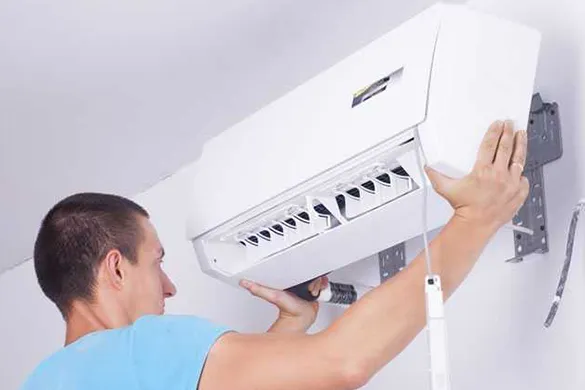
A heat pump can heat and cool a Detroit home, often with the gas furnace kept as backup for the coldest nights. We explain the setup that fits your house and your bills.
Heat pumps heat and cool with one system, and newer cold-climate models keep working in temperatures well below freezing. In Detroit, many homeowners pair a heat pump with their gas furnace. The heat pump handles mild days in spring and fall, and the furnace takes over in the deep cold. This is called a dual-fuel setup, and it works with the ducts most Detroit homes already have.
For homes without ducts, such as older houses with radiators, ductless heat pumps can add cooling and extra heat room by room. We look at your current heating system, your electrical panel and where the outdoor unit can sit before recommending a type. Snow and ice matter here. Outdoor units need to sit on a stand or pad above the snow line, and the defrost water needs somewhere to drain.
We install, repair and maintain heat pumps, and we are a participating contractor with the DTE Energy and Consumers Energy rebate programs, which include rebates on qualifying heat pumps. Program rules and amounts change, so we check what applies to the model you choose. We explain running costs honestly, since in Michigan the answer depends on your gas and electric rates and on how the system is set up.
Heat pumps in Detroit: common questions
Do heat pumps work in a Detroit winter?
Cold-climate models keep heating well below freezing, but they lose output in the coldest snaps. Many homes here pair one with a gas furnace as backup. We explain which setup fits your house.
Why is my heat pump giving off steam in winter?
That is usually the defrost cycle. The unit melts frost off its outdoor coil, and the steam is normal. If the coil stays coated in ice for hours, call us.
Is a heat pump cheaper to run than a gas furnace?
It depends on your gas and electric rates and how the system is set up. A dual-fuel system lets the cheaper source carry the load at each temperature.
How it works
- Call or book: Tell us what the system is doing. We schedule a visit.
- Diagnosis: A technician tests the system and finds the cause.
- Upfront price: You get the price for the repair or replacement before work begins.
- Fix & test: We complete the work and test the system with you.